UX Research · 2024
cais do sodré
cover.gif
summary.txt
An interdisciplinary service‑design project focused on Lisbon’s Cais do Sodré waterfront. The goal was to understand why the popular nightlife strip was constantly littered with cigarette butts and trash and to design a system that encourages cleaner habits. Through research and iterative prototyping, Eylül created a community‑driven clean‑up service that combines infrastructure improvements, incentives and awareness campaigns to make the riverside a welcoming, sustainable place again.
brief.md
Cais do Sodré’s riverside faced recurring litter issues caused by nightlife activity, limited infrastructure, and low environmental awareness. Despite regular cleanings, the area lacked a coordinated system connecting residents, businesses, and city services.
process.md
This project explores how service design can be used to understand everyday pollution patterns and improve collective responsibility in Lisbon’s Cais do Sodré district.
01.png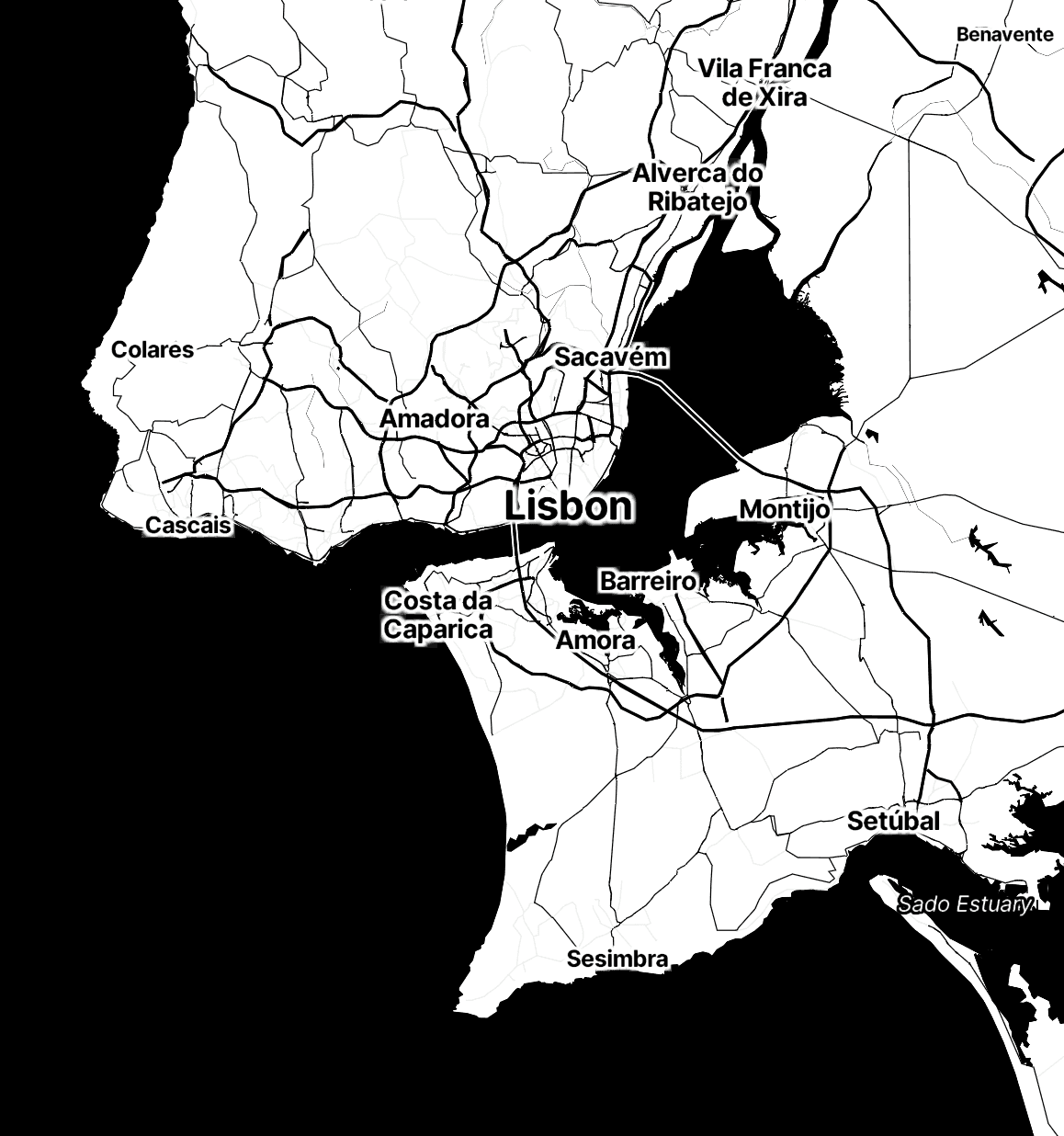
Through contextual research, field observations, and user interviews, the team identified the social patterns behind everyday pollution, from nightlife visitors leaving cigarette waste to restaurants struggling with limited cleaning infrastructure. The process started with on-site mapping of waste accumulation zones and interviews with residents, municipal workers, and business owners to uncover behavioral and systemic gaps.
02.png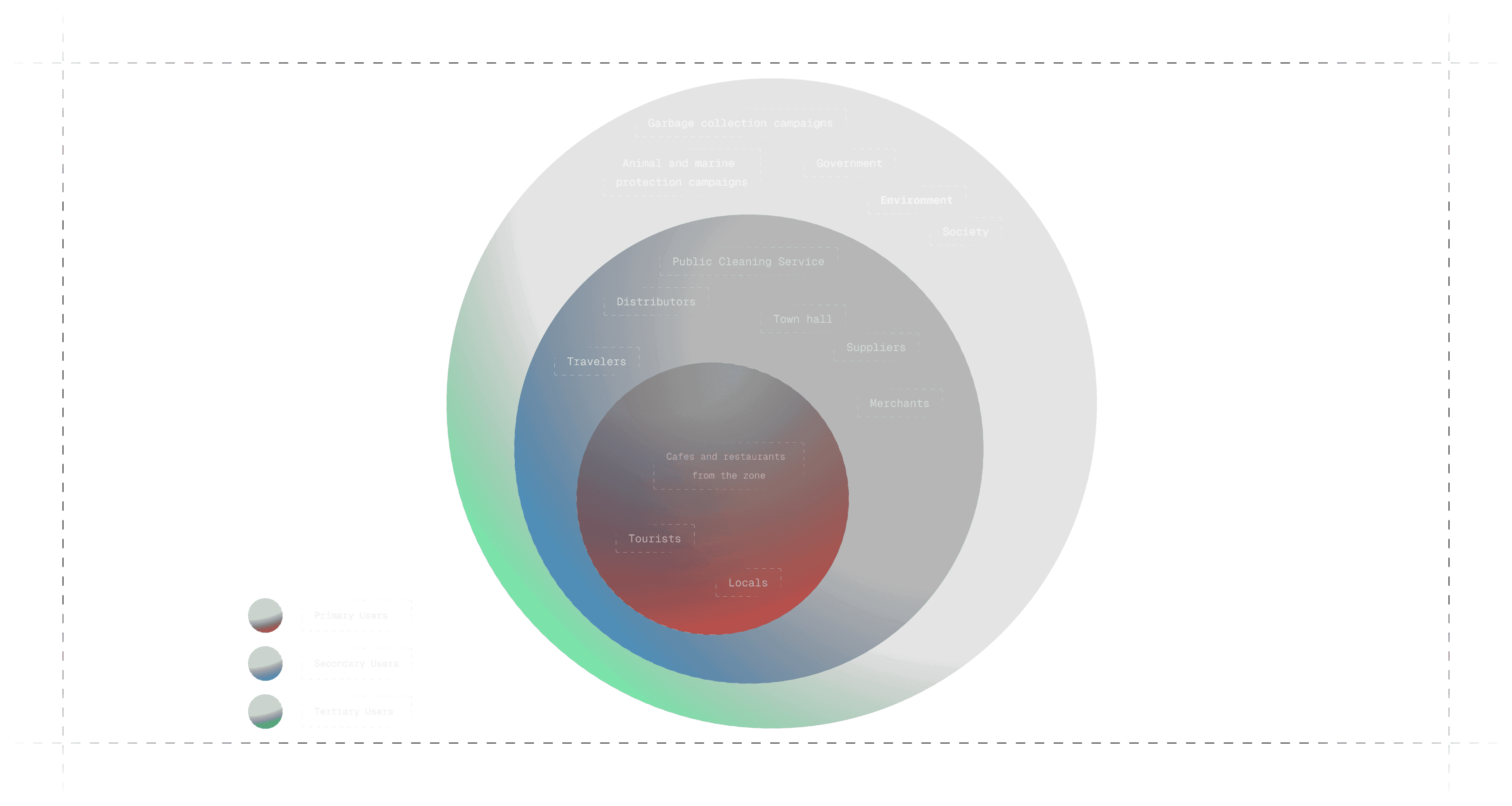
03.png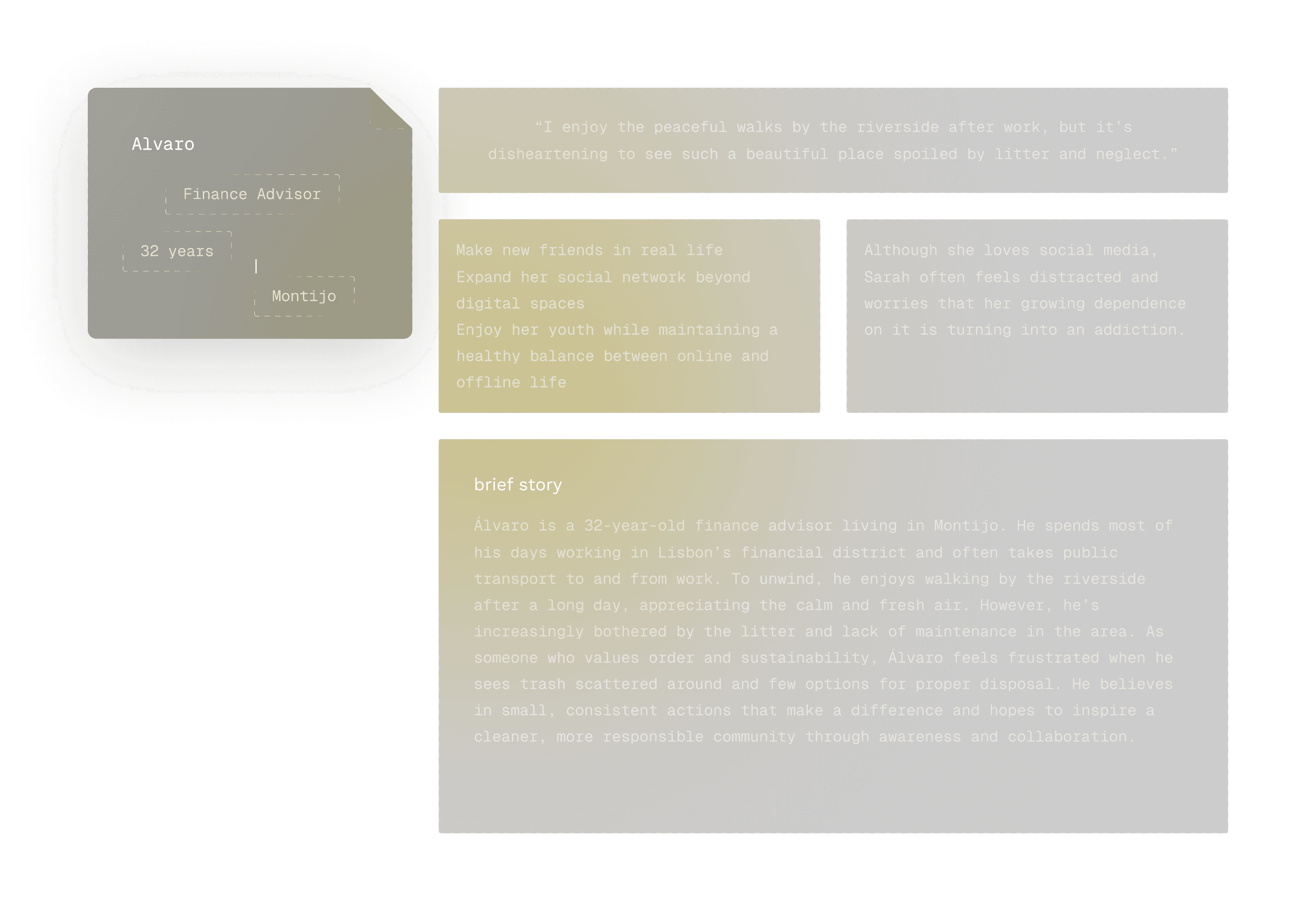
Insights from these sessions were clustered into an affinity map, revealing three key opportunity areas: lack of waste-disposal infrastructure, low environmental awareness, and weak coordination between businesses and the municipality. These findings guided the creation of a stakeholder map and service blueprint, framing how various actors, from local restaurants to city services, could contribute to a cleaner environment.
04.png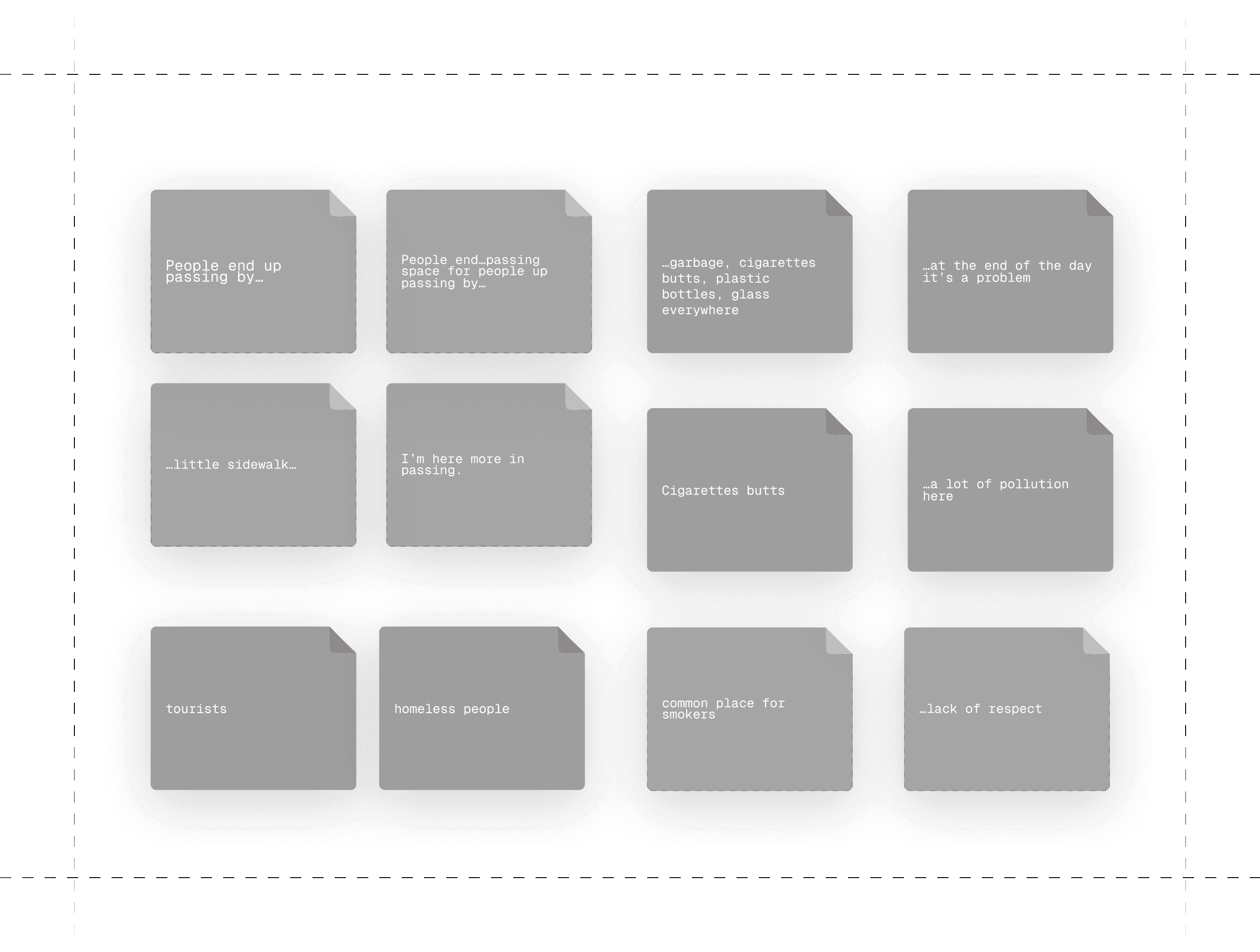
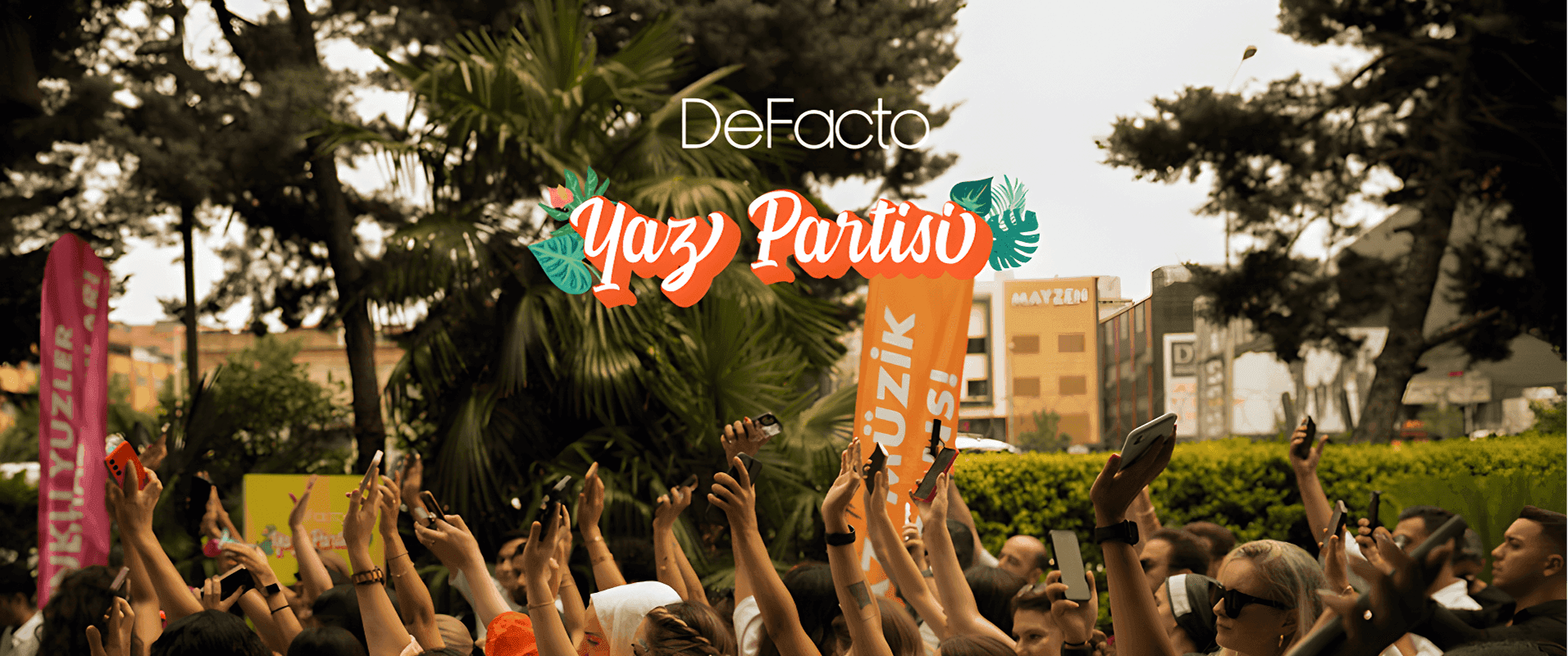
The design phase focused on developing interventions that could seamlessly integrate into people’s routines. Playful cigarette-butt boxes were designed to make disposal more engaging, and a collaborative cleaning schedule shared among restaurants ensured consistent maintenance. Visual communication assets, including posters and a social-media campaign, helped raise public awareness and encourage participation.
By testing these solutions and mapping their interactions across the service blueprint, the project demonstrated how coordinated, design-driven actions could transform a small urban area into a more sustainable and cooperative public space.
see-also